
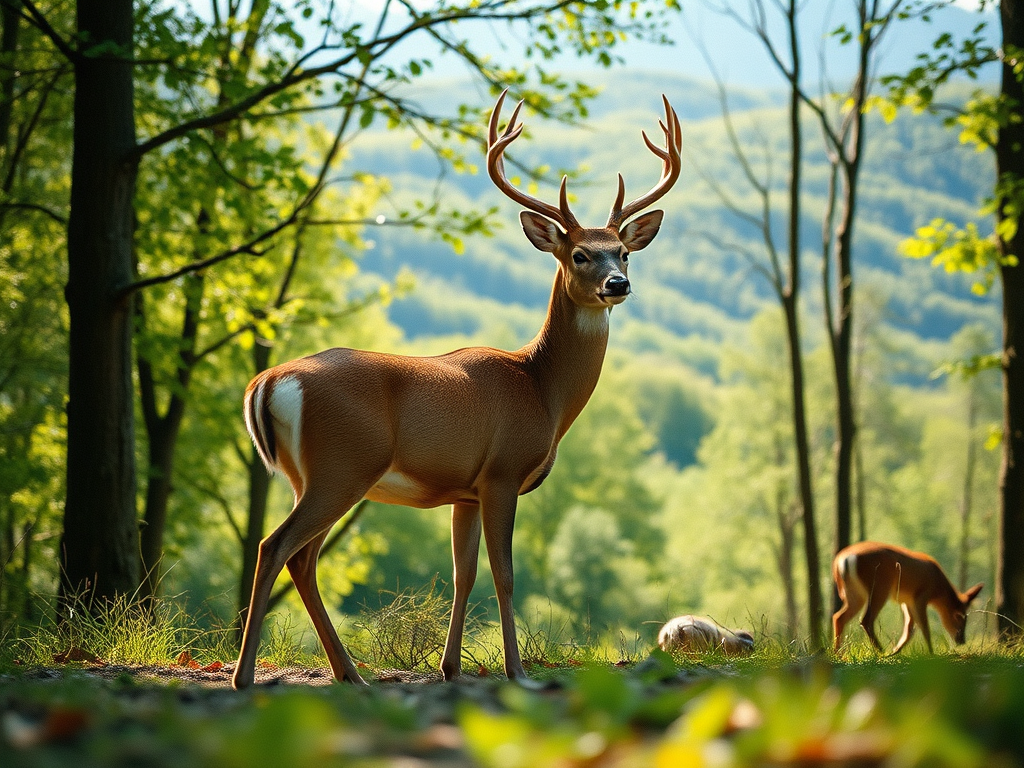
Eastern Kentucky, nestled in the heart of the Appalachian Mountains, is home to a diverse range of wildlife that reflects the region’s lush forests, rolling hills, and abundant water sources. The unique topography and climate make it a haven for a variety of species, from large mammals to tiny songbirds and fascinating reptiles. Whether you’re a nature enthusiast, an avid hiker, or just curious about the wildlife that thrives in this beautiful part of the state, this guide will introduce you to some of the most notable creatures you can encounter in Eastern Kentucky.
1. White-Tailed Deer (Odocoileus virginianus)
One of the most commonly sighted large mammals in Eastern Kentucky, the white-tailed deer is a symbol of the Appalachian wilderness.
- Appearance: Males (bucks) have antlers, which they shed and regrow each year. Both males and females (does) have a reddish-brown coat in the summer and a gray-brown coat in the winter.
- Habitat: They prefer forests, but are often seen at the edge of woodlands, fields, and even residential areas, especially in the early morning or late afternoon.
- Behavior: Known for their grace and agility, white-tailed deer are often spotted bounding through forests or grazing on vegetation.
2. Black Bear (Ursus americanus)
Eastern Kentucky is home to the state’s thriving population of black bears. These iconic animals are typically shy but can be spotted in more remote, forested areas.
- Appearance: Black bears are medium-sized, with a thick black coat, though some may have brown or cinnamon tones. They have rounded ears and a short, stubby tail.
- Habitat: Dense forests, rugged mountain terrain, and areas with abundant food sources, such as berry patches and oak trees.
- Behavior: Black bears are omnivorous and eat a diet that includes fruits, nuts, plants, insects, and small mammals. While they usually avoid humans, it’s important to practice bear-safe behavior when hiking or camping in bear territory.
3. Eastern Box Turtle (Terrapene carolina carolina)
A common reptile in the region, the Eastern box turtle is a beloved symbol of Kentucky’s slow-paced natural beauty.
- Appearance: These turtles have high-domed shells with patterns of yellow, orange, and brown. Their legs and head often feature similar bright colors.
- Habitat: Forested areas, meadows, and wetlands. They prefer moist environments with plenty of vegetation.
- Behavior: Box turtles are known for their slow movements and long lifespans. They are most active during the spring and summer and may spend the colder months hibernating in leaf litter or soft soil.
4. Red Fox (Vulpes vulpes)
Eastern Kentucky’s rolling hills and forest edges are ideal habitats for the elusive and clever red fox.
- Appearance: Red foxes have a striking reddish-orange coat with a white underside and a bushy tail tipped in white. Their pointed ears and slender bodies make them fast and agile.
- Habitat: They thrive in mixed landscapes, including forests, farmlands, and suburban areas, often hunting for small mammals, birds, and insects.
- Behavior: Foxes are primarily nocturnal and are known for their keen sense of hearing and ability to adapt to changing environments. They’re often heard more than seen, with their eerie, bark-like calls echoing through the woods at dusk.
5. Eastern Wild Turkey (Meleagris gallopavo silvestris)
The Eastern wild turkey is one of the most recognized and abundant game birds in Kentucky, often seen strutting through fields and forests.
- Appearance: Males (toms) are large and boast iridescent feathers with a bronze-green sheen, while females (hens) are typically smaller and duller in color.
- Habitat: Turkeys prefer mature forests with a mix of open areas for foraging. They are commonly seen in forests, clearings, and even near rural homes.
- Behavior: Known for their distinctive gobble, males put on impressive displays during the mating season, fanning their tail feathers and puffing out their chests to attract females.
6. Ruffed Grouse (Bonasa umbellus)
A secretive game bird of the Appalachian forest, the ruffed grouse is known for its drumming display during the spring mating season.
- Appearance: The ruffed grouse has mottled brown and gray feathers with a slight crest on its head. Males have a distinctive black ruff of feathers around their necks.
- Habitat: Grouse prefer young, mixed forests with dense undergrowth, often near water sources like creeks and rivers.
- Behavior: Males perform a unique drumming sound by rapidly beating their wings to attract females during the breeding season. This sound is one of the classic calls of the Eastern Kentucky woods.
7. Eastern Hellbender (Cryptobranchus alleganiensis)
Eastern Kentucky’s streams and rivers are home to one of the region’s most unique amphibians, the Eastern hellbender, a large and ancient species of salamander.
- Appearance: Hellbenders are large, flat-bodied salamanders that can grow up to 29 inches long. They are typically brown or gray with a wrinkled appearance.
- Habitat: Fast-flowing, clean streams and rivers with rocky bottoms, where they can hide and hunt for prey.
- Behavior: Hellbenders are entirely aquatic and primarily nocturnal, feeding on small fish and crustaceans. Their presence in a stream is often an indicator of good water quality.
8. Bald Eagle (Haliaeetus leucocephalus)
The majestic bald eagle has made a strong comeback in Eastern Kentucky, often seen soaring above rivers and lakes.
- Appearance: Adults have a striking white head and tail with a dark brown body and wings. Juvenile bald eagles are mostly brown and gradually develop their iconic plumage.
- Habitat: Bald eagles are often found near large bodies of water, including rivers, lakes, and reservoirs, where they hunt for fish.
- Behavior: These birds are powerful fliers and are known for their impressive hunting abilities. Bald eagles mate for life and often return to the same nesting sites year after year.
9. Eastern Cottontail Rabbit (Sylvilagus floridanus)
A common sight in both rural and suburban areas, the Eastern cottontail rabbit is known for its twitchy nose and fluffy tail.
- Appearance: They have a soft brown-gray coat with a white underside and a small, round, fluffy tail.
- Habitat: Cottontail rabbits prefer grassy fields, meadows, and the edges of woodlands, but they can also be found in backyards and gardens.
- Behavior: Active year-round, cottontails feed on grasses, herbs, and garden vegetables. They are most active at dawn and dusk, making them a common sight for early morning hikers.
10. Timber Rattlesnake (Crotalus horridus)
Although sightings are rare, the timber rattlesnake is one of the region’s most fascinating and misunderstood reptiles.
- Appearance: Timber rattlesnakes have a patterned body with a mix of brown, yellow, and black scales. They are large, thick-bodied snakes, easily recognized by their rattling tail.
- Habitat: They prefer rugged, remote areas such as rocky hillsides and forested regions, often near open spaces where they can bask in the sun.
- Behavior: Timber rattlesnakes are typically shy and avoid human contact. They are venomous, but attacks on humans are extremely rare. They play an important role in controlling rodent populations.
Conclusion
Eastern Kentucky’s rich biodiversity offers a captivating glimpse into the Appalachian wilderness. From majestic black bears and elusive foxes to the fascinating world of reptiles and amphibians, the region is home to a wide variety of wildlife that thrives in its diverse habitats. Whether you’re hiking in the mountains, camping by a river, or simply enjoying the outdoors, keep an eye out for these remarkable creatures that make Eastern Kentucky such a special place to explore.



 The Modern Kentucky realtor
Leave a comment